
When Designing a New Website
Color themes on websites strongly influence user emotions, trust, and engagement.
Each color carries psychological associations that shape how visitors perceive a brand, interact with content, and decide whether to stay or convert.
🎨 Key Psychological Implications of Website Colors
- Blue – Trust & Calmness Often used by tech and finance companies, blue conveys stability, professionalism, and reliability. It reduces anxiety and encourages users to feel secure.
- Green – Health & Growth Associated with nature, balance, and success, green is restful for the eyes and works well for eco-friendly or wellness brands.
- Red – Excitement & Urgency Red stimulates energy, passion, and urgency. It’s effective for calls-to-action (CTAs), sales promotions, or warnings, but overuse can feel aggressive.
- Orange – Friendliness & Enthusiasm Radiates warmth and creativity. Orange is often used for playful brands or CTAs that want to feel approachable.
- Yellow – Optimism & Attention Bright and cheerful, yellow signals clarity and positivity, but can strain the eyes if overused. It’s often applied to highlights or warnings.
- Purple – Luxury & Creativity Historically linked to royalty, purple conveys sophistication, mystery, and premium quality. It’s common in beauty, art, and luxury branding.
- Pink – Playfulness & Romance Evokes youth, femininity, and fun. Frequently used in lifestyle, fashion, and beauty websites.
- Black/Gray – Power & Sophistication Neutral tones suggest elegance, authority, and timelessness. They’re often used in luxury or minimalist designs.
🧠 Why Color Matters in Web Design
- First Impressions: Visitors form opinions about a site in seconds, and color is a major driver of that impression.
- Behavioral Influence: Even small changes, like button color, can dramatically increase conversions.
- Brand Identity: Consistent use of color reinforces recognition and credibility.
- Accessibility: High-contrast schemes improve readability and inclusivity for visually impaired users.
- Cultural Context: Colors may carry different meanings across cultures (e.g., white = purity in the West, mourning in parts of Asia).
✅ Practical Tips for Using Color Themes
- Match colors to brand personality (e.g., blue for trust, green for eco-consciousness).
- Use warm colors (red, orange, yellow) for CTAs to grab attention.
- Balance with cool colors (blue, green) for backgrounds to reduce visual fatigue.
- Test variations—A/B testing button colors or themes can reveal what resonates with your audience.
- Ensure accessibility by checking contrast ratios and avoiding problematic combinations (like red/green for colorblind users).
In short: Website color themes aren’t just aesthetic—they’re psychological tools that shape perception, trust, and action. Thoughtful use of color can elevate user experience, strengthen brand identity, and boost conversions.
References
1Color Psychology in Website Design | New Target, Inc.. https://www.newtarget.com/web-insights-blog/color-psychology-in-website-design/
2Color Theory for Web Design – Color Schemes, Psychology & Accessibility …. https://design.dev/guides/color-theory/
3Exploring Color Psychology in Design | Toptal®. https://www.toptal.com/designers/ux/color-psychology
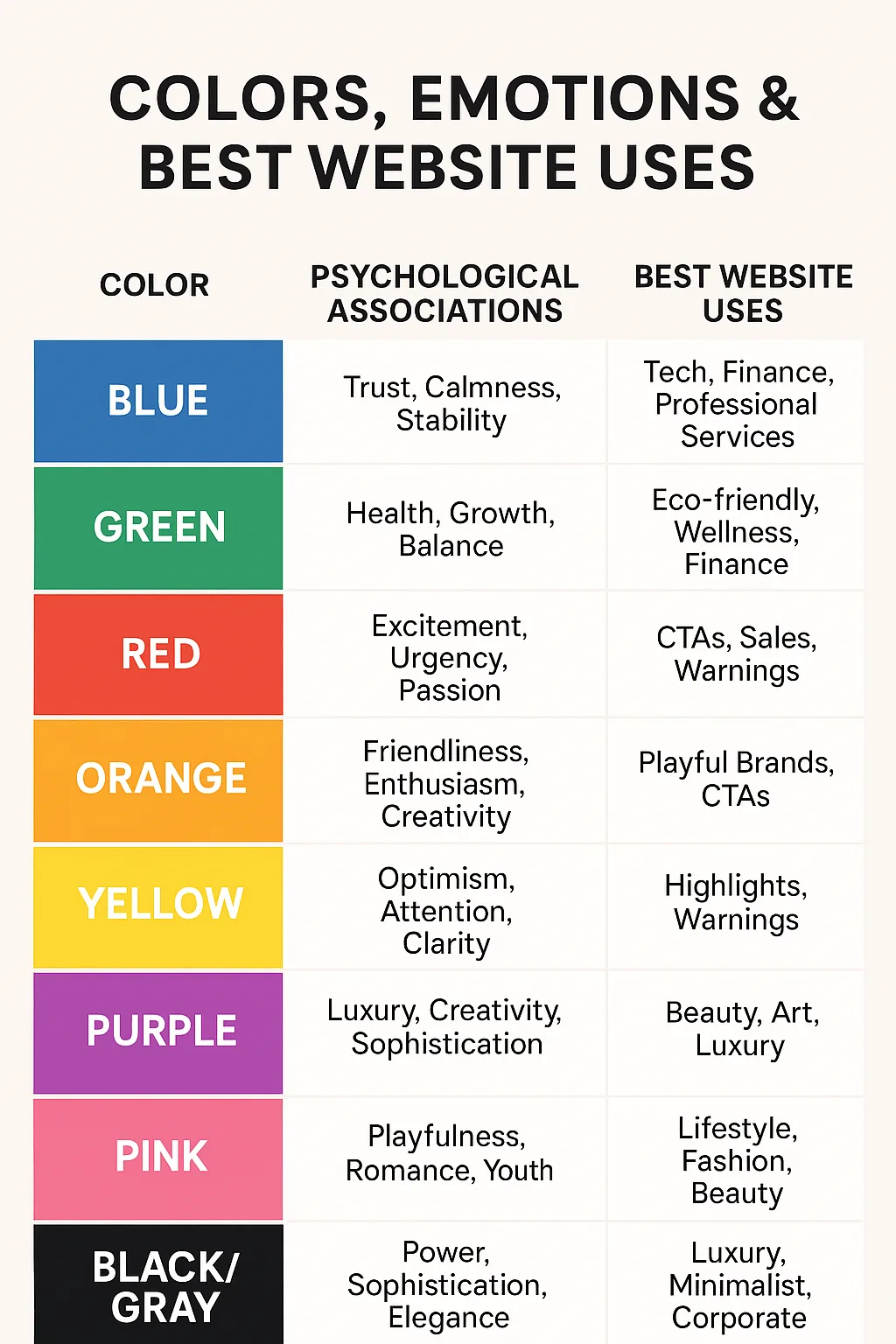
Visual Chart: Colors, Emotions & Best Website Uses
| Color | Psychological Associations | Best Website Uses |
|---|---|---|
| Blue | Trust, Calmness, Stability | Tech, Finance, Professional Services |
| Green | Health, Growth, Balance | Eco-friendly, Wellness, Finance |
| Red | Excitement, Urgency, Passion | CTAs, Sales, Warnings |
| Orange | Friendliness, Enthusiasm, Creativity | Playful Brands, CTAs |
| Yellow | Optimism, Attention, Clarity | Highlights, Warnings |
| Purple | Luxury, Creativity, Sophistication | Beauty, Art, Luxury |
| Pink | Playfulness, Romance, Youth | Lifestyle, Fashion, Beauty |
| Black/Gray | Power, Sophistication, Elegance | Luxury, Minimalist, Corporate |
